What is the best answering service for a small business in 2026?
The best answering service for a small business in 2026 is the one that reliably completes that business’s highest-value call outcomes, handles exceptions safely, fits the existing workflow, performs during peak demand, provides usable records, and has a total cost the business can justify. That may be a live answering service, virtual receptionist, AI receptionist, hybrid model, or simple voicemail-and-callback process. Use the same real call scenarios and scorecard for every option instead of relying on a generic ranking.
What matters most
- There is no universal best answering service for every small business.
- Define the outcomes the service must complete before comparing providers.
- Use the same representative and exception call scenarios for every option.
- Verify person handoff, integrations, record quality, and peak-volume behavior.
- Model total cost at normal and busy volume.
- Choose the system that produces the strongest verified outcomes with the least staff cleanup.
Best Answering Service for Small Business: 2026 Buyer’s Guide
There is no single best answering service for every small business. A dental office, HVAC contractor, restaurant, auto shop, and entertainment venue receive different calls, operate under different rules, and need different outcomes.
A useful buyer’s guide should therefore give you an evaluation method rather than an unexplained vendor ranking. Define the job, run representative calls, score the results, model peak volume, and verify how the service hands work back to your team.
The best option is the one that creates the fewest abandoned requests and the least correction work while preserving the level of human judgment your calls actually require.
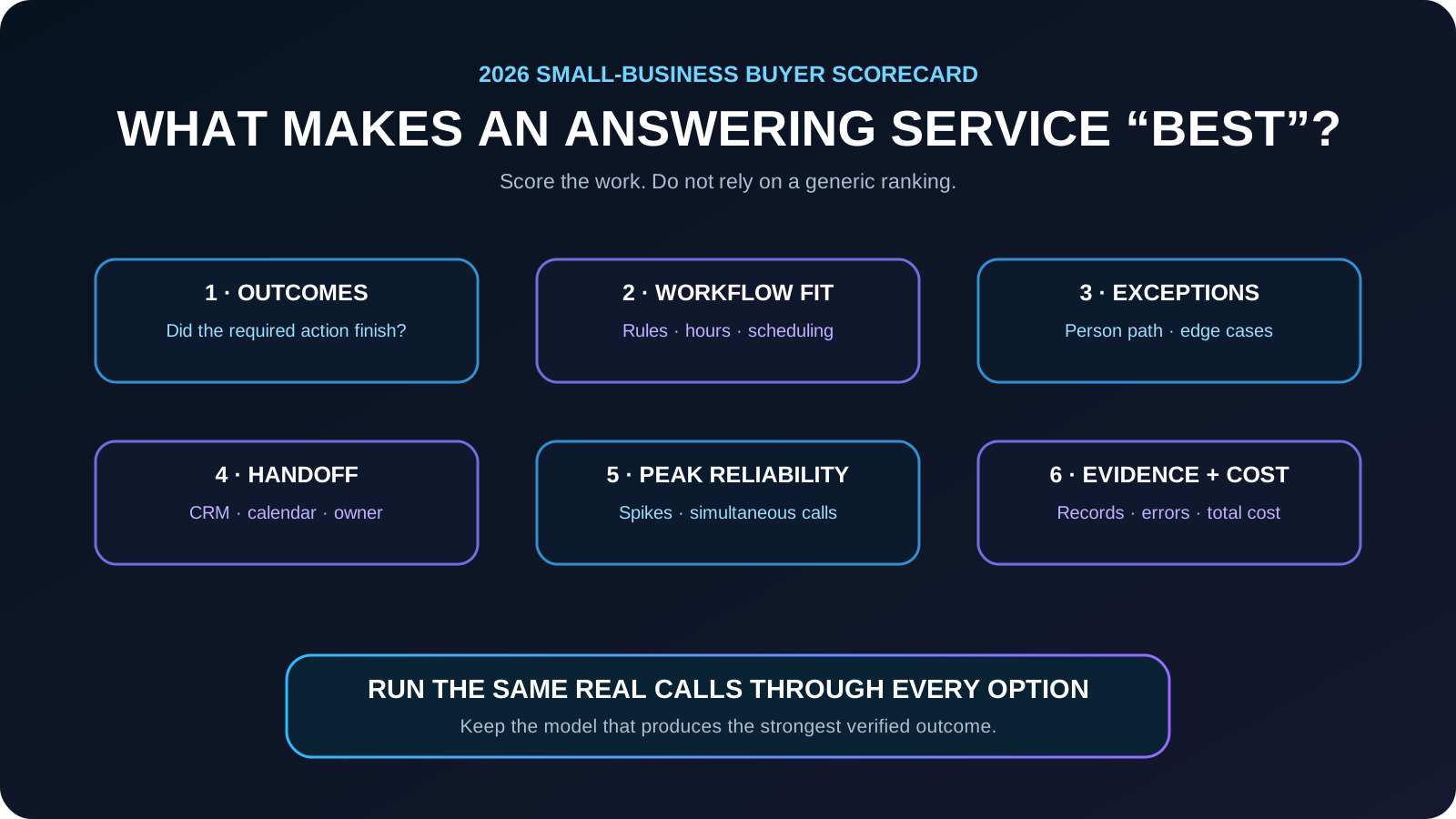
The six-part scorecard for choosing an answering service
Score every option against the same operating requirements before comparing marketing claims.
- Outcome completion: does the call end with the required booking, lead, message, transfer, callback task, or other defined next step?
- Workflow fit: can it follow your service areas, hours, qualification rules, scheduling rules, and approved business knowledge?
- Exception handling: what happens when the caller is upset, unclear, outside policy, or asks for a person?
- Business-system handoff: does the result reach the calendar, CRM, owner, location, or queue that actually owns the next action?
- Peak reliability: what happens during simultaneous calls, seasonal spikes, after-hours demand, and staff shortages?
- Evidence and total cost: can you inspect calls, outcomes, errors, usage, and the full cost required to produce useful results?
A provider is not “best” because it has the longest feature list. It is best when it passes the work your business needs done.
Red flags to resolve before you sign
- The provider cannot explain what happens when the script or workflow fails.
- Pricing terms do not clearly define included usage, overages, or paid add-ons.
- The service promises integrations or scheduling actions that cannot be demonstrated in your actual setup.
- There is no clear path for a caller who asks for a person or needs an exception.
- You cannot export or inspect call records, outcomes, or the information handed to your team.
- Peak or simultaneous-call behavior is described vaguely instead of being tested.
- The sales demo is impressive but the provider will not run your representative real-world scenarios.
Start with outcomes, not features
Features sound impressive until they fail to produce a useful result. Write down the outcomes that matter most. For one company, success may mean booking an estimate. For another, it may mean identifying an emergency and reaching the on-call manager. For a clinic, it may mean routing administrative requests without giving medical advice.
- Book or request appointments
- Qualify new leads
- Transfer urgent callers
- Answer approved frequently asked questions
- Capture complete messages
- Send confirmations or follow-up texts
- Create structured CRM records
Choose the right service model
| Model | Best fit | Watch for |
|---|---|---|
| Live answering service | Sensitive or unpredictable conversations | Variable agent quality, usage pricing, limited context |
| Virtual receptionist | Businesses needing broader administrative support | Scope boundaries, staffing coverage, training time |
| AI receptionist | Repeatable calls requiring immediate, consistent handling | Workflow quality, escalation design, monitoring |
| Hybrid AI + human | Mixed call patterns and high service expectations | Integration complexity and clear handoff ownership |
| Voicemail + callback | Very low volume and low urgency | Caller abandonment and delayed response |
Score providers using a call-outcome test
- Create ten realistic call scenarios from recent business activity.
- Include at least three edge cases, such as an angry caller, unclear speech, or a request outside policy.
- Define the information and action required for each scenario.
- Run the same scenarios through each provider.
- Score accuracy, completion, tone, speed, escalation, and data quality.
- Review the total monthly cost at your normal and peak volume.
Non-negotiable buying questions
- Can the service handle simultaneous calls during a spike?
- How are scripts, business hours, promotions, and policies updated?
- What happens when the caller asks something outside the script?
- Can the caller reach a person when necessary?
- Where are recordings, summaries, and lead details stored?
- Can the service integrate with the calendar or CRM you already use?
- How are failures reviewed and corrected?
- Can you run a limited pilot before a long commitment?
What 'best' should mean in 2026
The strongest option should answer quickly, complete valuable outcomes, preserve caller trust, fit your systems, and give you evidence of performance. It should also make ownership clear: someone must maintain business rules, review exceptions, and update the workflow when the business changes.
Do not buy the service with the longest feature list. Buy the service that passes your real call scenarios.
Example: why a generic ranking fails
A dental patient wants to reschedule, while an HVAC caller reports no cooling during extreme heat.
The dental workflow needs calendar rules and careful administrative boundaries. The HVAC workflow needs urgency screening, address capture, and on-call routing.
A provider can be excellent for one workflow and weak for the other. “Best” must be tied to a defined job.
Frequently asked questions
Should a small business use a human or AI answering service?
Use the call pattern to decide. Predictable, repeatable calls are strong candidates for AI. Sensitive or highly variable calls may need human handling. A hybrid can cover both.
How long should a pilot run?
Long enough to include normal volume, busy periods, after-hours calls, and common edge cases. Define success metrics before the pilot starts.
What should I measure?
Measure answer rate, completed outcomes, missing fields, transfer accuracy, appointment quality, caller complaints, staff follow-up time, and cost per useful result.
What is the best answering service for a small business with after-hours calls?
The best option is the one that can follow the business’s actual closed-hours rules, capture the required information, distinguish routine requests from approved escalations, and create a clear next action for the team. Test the after-hours workflow before choosing.
What should I ask during an answering-service demo?
Ask the provider to run your real call scenarios, including a normal lead, appointment request, after-hours call, interruption, unclear answer, exception, and request for a person. Inspect the resulting message, transfer, CRM record, or scheduling action rather than judging the voice alone.
How to verify this answer in your own business
A credible “best answering service” decision should come from a repeatable scorecard applied to the business’s real call scenarios, peak conditions, handoffs, records, and total operating cost.
- scenario pass rate
- answer speed
- workflow completion
- escalation accuracy
- staff correction time
- peak-volume reliability
Create a written scorecard before demos begin. Test the same normal and exception scenarios with every option, inspect the resulting business records and handoffs, model normal and peak cost, and keep the provider or operating model with the strongest verified result.
Evidence policy: this page does not invent a universal conversion rate. Results depend on call demand, workflow quality, staff response, and implementation.
See how AEOS connects customer conversations to business actions.
Explore AEOS by Orca Charts for AI receptionist, scheduling, CRM, follow-up, business Q&A, live transfers, and team workflows for Answering Service Alternatives.