How much does an answering service cost for a small business?
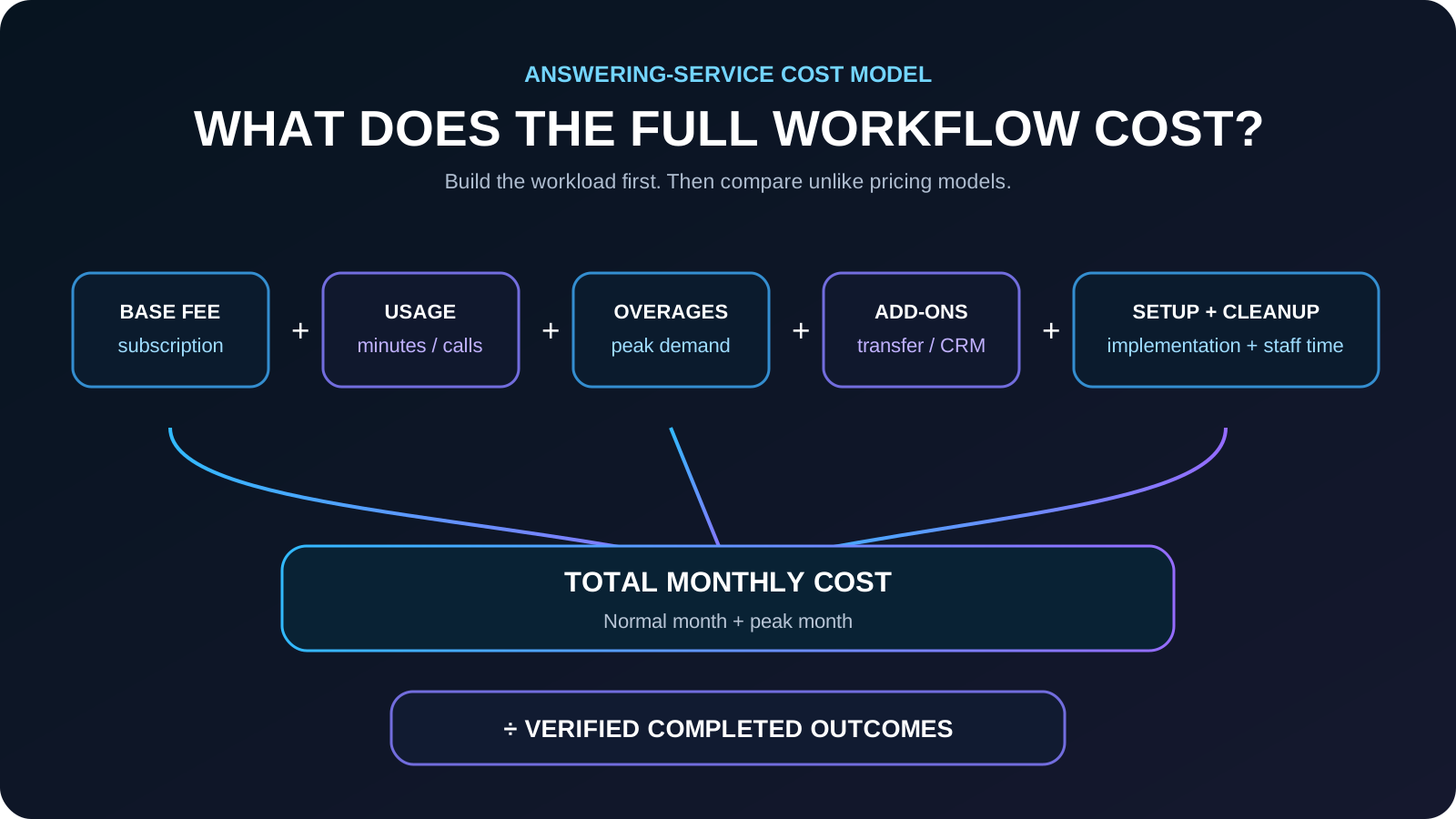
There is no single answering-service price that applies to every small business. Providers may charge by minute, call, usage tier, subscription, implementation work, or a blended model. The useful comparison is total monthly operating cost: base fee plus usage, overages, add-ons, implementation, and internal staff cleanup. Then divide that total by verified outcomes such as qualified leads, accurate messages, appointments, or correct escalations.
What matters most
- There is no universal answering-service price because providers sell different units and scopes of work.
- Model both a normal month and a peak month.
- Include base fees, usage, overages, add-ons, implementation, and internal staff cleanup.
- Per-minute, per-call, tiered, subscription, and blended pricing are not directly comparable without a workload model.
- Compare the price of completed qualified outcomes, not just answered calls.
- Use written provider terms and actual invoices or usage reports to verify the model.
How Much Does an Answering Service Cost? Pricing Models & Hidden Costs (2026)
Answering-service pricing is difficult to compare because providers do not all sell the same unit. One may charge by minute, another by call, another by included usage tiers, and an AI service may combine platform access, voice usage, implementation, or workflow fees.
The headline plan price is therefore only one part of the decision. Build a workload model around your normal month and your busy month, include every recurring and variable charge, then include the internal staff work created by incomplete messages or failed handoffs.
The final comparison should answer one question: what does the system cost to produce a verified useful outcome for the business?
The five workload numbers to collect before comparing quotes
A pricing comparison becomes much more useful when every provider is asked to price the same workload.
- Total inbound calls during a normal month and a peak month
- Typical handling time or the complexity of the most common call types
- Busy-period or simultaneous-call demand
- Percentage of calls requiring transfers, scheduling, texting, or CRM work
- After-hours, weekend, holiday, multilingual, or multi-location coverage requirements
If two quotes are based on different workloads, the cheaper quote may not actually be cheaper.
Use a total-cost formula instead of comparing base fees
A simple workload model keeps unlike pricing structures comparable. Use the provider’s written terms and your own expected usage rather than assuming a generic market rate.
- Start with the recurring base subscription or service fee.
- Add usage that is not included in the base plan.
- Add expected overages at normal and peak volume.
- Add transfers, messages, scheduling, integrations, reporting, or other paid features.
- Add implementation and ongoing workflow-change costs when they apply.
- Estimate internal staff time required to correct incomplete or inaccurate handoffs.
- Divide the resulting monthly total by verified completed outcomes.
Total monthly cost ÷ verified completed outcomes = a more useful comparison than base price alone.
Common pricing models
- Per-minute plans charge for the time agents spend handling calls, sometimes including hold time or post-call work.
- Per-call plans charge for each answered interaction and may define separate rates for transfers, messages, or outbound follow-up.
- Tiered plans bundle a fixed allowance and charge overages after the included usage is consumed.
- Flat monthly subscriptions offer predictable billing but may limit features, concurrency, integrations, or supported workflows.
- Implementation or setup fees cover scripting, account configuration, integrations, testing, and launch support.
What changes the real monthly cost
Call volume matters, but call complexity often matters more. A two-minute message-taking call uses fewer resources than a ten-minute scheduling conversation with several qualification questions. Transfers, bilingual service, holiday coverage, outbound follow-up, CRM entry, and custom reporting may also affect cost.
Seasonality can make a low base plan misleading. HVAC, plumbing, restoration, tax, legal, and event businesses may experience sudden spikes. Ask how the provider handles overages, concurrent calls, bursts, and temporary changes in volume.
- Average call length and total monthly calls
- After-hours, weekend, and holiday coverage
- Number of scripts, locations, departments, or brands
- Scheduling and CRM integration requirements
- Transfers, text messages, recordings, summaries, and reporting
- Implementation, revision, and account-management fees
Calculate cost per completed outcome
Suppose two services answer the same number of calls. One captures names and phone numbers but leaves your staff to chase every lead. The other qualifies the request, books eligible appointments, and sends structured data into the CRM. Even if the second service costs more, it may cost less per completed outcome.
- Choose one outcome to measure, such as booked estimates.
- Count the total monthly service cost, including overages and add-ons.
- Count only outcomes that meet your quality standard.
- Divide total cost by completed outcomes.
- Compare that figure with the gross profit and staff time associated with each outcome.
Questions to ask before signing
- What exactly counts as a billable minute or call?
- Are hold time, transfers, after-call notes, and outbound texts included?
- What happens when monthly usage exceeds the plan?
- How many simultaneous calls can be answered?
- Who updates scripts and how quickly can changes go live?
- Are integrations included, custom priced, or unavailable?
- Can I export call records and outcome data?
- What are the cancellation, minimum-term, and data-retention rules?
Traditional service versus AI pricing
Traditional services often tie cost to human time. AI services commonly tie cost to platform access, voice usage, workflow complexity, or a combination. Neither model is automatically more economical. A high-volume business with repetitive calls may benefit from automation, while a low-volume business with complex conversations may prefer human coverage.
Compare one full month at realistic volume. Do not compare a base plan from one provider with a fully configured plan from another.
Example: two plans with the same headline price
A plumbing company receives estimate requests, emergency calls, and scheduling changes.
Plan A has a low base fee but charges for minutes, transfers, and overages. Plan B costs more upfront but includes the workflow and CRM delivery the company needs.
Plan B can be less expensive when it completes more calls without staff cleanup. The comparison must include the entire workflow.
Frequently asked questions
Why do answering service quotes vary so much?
Providers differ in staffing model, service level, included minutes, call complexity, integrations, reporting, and account support. The quote only makes sense when the included work is defined.
What is the biggest hidden cost?
Overages and incomplete outcomes are common sources of surprise. A service can appear inexpensive while creating substantial internal follow-up work.
Should I choose a flat-rate plan?
Predictable billing is useful, but verify the limits behind the rate. Review concurrency, fair-use rules, feature caps, and what happens during seasonal spikes.
Do answering services charge per minute or per call?
Both models are common, along with usage tiers, subscriptions, implementation fees, and blended pricing. Ask exactly what counts as billable usage and which transfers, messages, integrations, or overages are separate.
How do I compare AI receptionist pricing with human answering-service pricing?
Price the same workload and required outcomes under both models. Include recurring fees, usage, overages, setup, integrations, and the internal staff time needed after each call, then compare total cost per verified completed outcome.
How to verify this answer in your own business
Pricing evidence should come from a written workload model, provider terms, actual invoices or usage reports, and the number of verified business outcomes completed.
- monthly base fee
- included usage
- overage rate
- setup fee
- transfer charges
- integration charges
- completed outcomes
Build the same normal-month and peak-month workload for each option. Reconcile the estimate against written pricing terms, then compare actual total spend, staff cleanup, and completed qualified outcomes after launch.
Evidence policy: this page does not invent a universal conversion rate. Results depend on call demand, workflow quality, staff response, and implementation.
See how AEOS connects customer conversations to business actions.
Explore AEOS by Orca Charts for AI receptionist, scheduling, CRM, follow-up, business Q&A, live transfers, and team workflows for Answering Service Alternatives.