What should an AI receptionist do when a caller asks to speak with a human?
When a caller asks for a person, an AI receptionist should acknowledge the request promptly, stop any unnecessary sales or qualification flow, and follow the business’s approved handoff rule. It may ask for one brief routing detail when needed to choose the correct destination, but it should not make the caller justify the request. The next step may be a live transfer, a transfer request that requires acceptance, an alert to an available team member, a scheduled callback, a structured message, or an urgent escalation path. The AI should state the actual status: a transfer attempt is not the same as an accepted transfer, a message is not the same as a scheduled callback, and a callback request is not the same as a completed callback. It should never claim that a person is available, connected, notified, or committed to respond unless the underlying workflow actually confirms that state.
What matters most
- Honor a clear request for a person without forcing unnecessary questions or continuing a sales script.
- Define live transfer, accepted transfer, alert, callback, message, and urgent escalation as separate approved outcomes.
- Distinguish transfer attempted, transfer accepted, and connected states.
- Distinguish message captured, callback requested, callback scheduled, and callback completed states.
- Preserve caller context while collecting only what the handoff actually needs.
- Measure completed connections, callback completion, failed transfers, repeat explanations, and unresolved handoffs.
AI Receptionist Human Handoff: Transfers, Callbacks & Escalation Rules (2026)
A caller asking for a person is not an objection that the AI should overcome. It is an operating instruction. The caller may prefer person-led help, may have an unusual exception, may already be frustrated, or may need a conversation the automated workflow is not authorized to complete.
The important design choice is not simply whether transfers are enabled. The business should define the exact handoff states available during normal hours, after hours, busy periods, and urgent situations—and what the AI may truthfully tell the caller at each state.
Good handoffs also preserve context without forcing more intake than is necessary. The receiving person should get enough information to continue the conversation, while the caller should not have to repeat a long story or complete an unrelated qualification flow first.
Honor the person request before continuing the workflow
Once the caller clearly asks for a person, the AI should acknowledge it and stop any step that is not necessary for routing, safety, or preserving the handoff.
- Do not argue with the caller or explain why the AI should be sufficient.
- Do not repeatedly restart the automated script.
- Do not continue selling or qualifying after a clear person request unless a brief detail is required to choose the correct destination.
- Do ask for the requested department or person when that determines routing.
- Do preserve information the caller already provided so the receiving team member can continue without making the caller start over.
- Do use the approved sensitive, urgent, or regulated handoff path when the business requires one.
A request for a person is a routing event, not a persuasion challenge.
Define the approved person-handoff outcomes
A business should decide in advance which handoff outcomes are actually available. The AI should select only from those configured outcomes rather than improvising availability.
- Live transfer: route the active call when the destination and transfer method are approved.
- Accepted transfer request: a person or destination explicitly accepts the handoff before the caller is described as connected.
- Team alert: notify an available person or group without claiming the person has accepted the call.
- Scheduled callback: create a callback only when the workflow actually creates or confirms that callback state.
- Structured message: capture the minimum useful context for follow-up when no live or scheduled option is available.
- Urgent escalation: use the business’s approved urgent or safety-sensitive path without inventing availability, response time, or outcome.
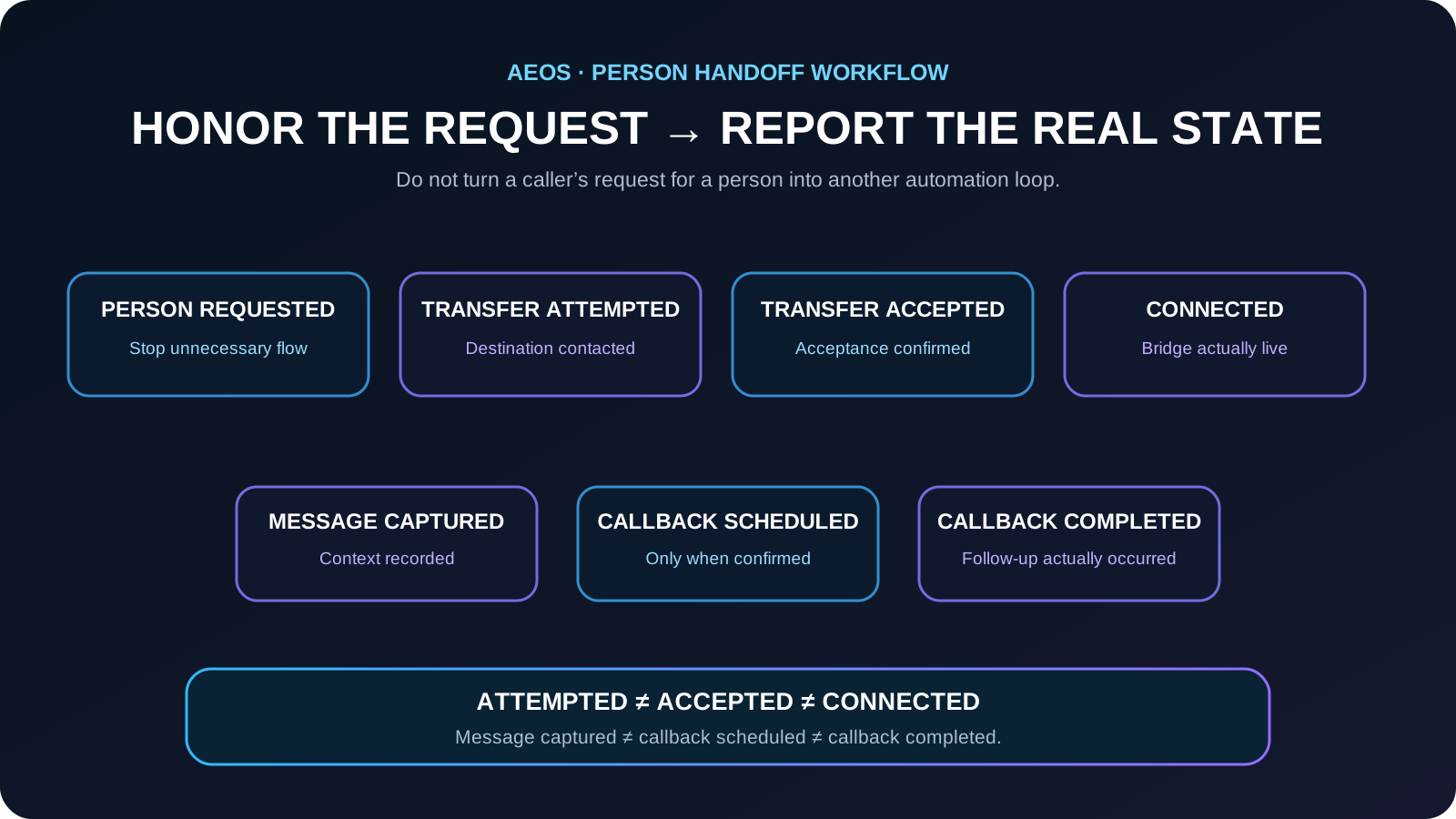
PERSON REQUESTED ≠ TRANSFER ATTEMPTED ≠ TRANSFER ACCEPTED ≠ CONNECTED.
Carry the right context into the handoff
The goal is continuity, not another intake interview. Collect only the information needed to route the caller and help the receiving person understand what has already happened.
- Caller name and callback number when permitted and useful
- Requested person, team, or department
- One-sentence reason for the handoff when routing requires it
- Relevant information already collected during the conversation
- Any caller-stated timing constraint or deadline
- The exact handoff state already attempted or created
Do not make the caller repeat information the system already has unless verification is actually required.
Use precise transfer, alert, and connection status
Transfer language should describe what the phone system actually confirmed. Dialing a destination is not the same as reaching a person, and sending an alert is not the same as receiving an accepted response.
- Transfer requested: the system has started the approved transfer process.
- Transfer ringing or attempted: the destination has been contacted, but acceptance is not yet confirmed.
- Transfer accepted: the receiving workflow confirms acceptance when that state is technically available.
- Connected: use only when the actual call bridge or transfer state confirms the caller is connected.
- Alert sent: a notification was delivered or queued according to the configured system; do not describe this as a live connection.
- Transfer failed or unavailable: tell the caller and immediately offer the approved fallback rather than creating a transfer loop.
ATTEMPTED ≠ ACCEPTED ≠ CONNECTED.
Keep callback and message states separate
When nobody is available, the fallback should be useful and truthful. A captured message is not automatically a scheduled callback, and a callback request is not proof that somebody has completed the callback.
- Message captured: the request and context were recorded.
- Message routed: the configured destination received or queued the message.
- Callback requested: follow-up was requested but no appointment or response time is implied.
- Callback scheduled: use only when a workflow actually records a scheduled callback.
- Callback completed: use only when the business’s record confirms the person-to-caller follow-up occurred.
- Response window: state one only when the business has approved and can support it.
MESSAGE CAPTURED ≠ CALLBACK SCHEDULED ≠ CALLBACK COMPLETED.
Handle after-hours, unavailable, urgent, and sensitive requests differently
The same person request can require a different outcome depending on the business schedule, the requested destination, and the business’s approved urgency or sensitivity rules.
- Normal hours with an available destination → use the approved live or acceptance-based transfer path.
- Destination busy or unavailable → offer the approved callback, message, alternate person, or later-contact path.
- After hours → follow the configured after-hours person and escalation rules rather than pretending daytime staff are available.
- Urgent or safety-sensitive statement → use only the business’s written escalation or emergency-services language and routing.
- Angry or frustrated caller → acknowledge the person request, avoid debating, and minimize additional intake.
- Sensitive or regulated request → collect only what the approved process allows before handing off.
Availability, urgency, and handoff ownership should come from business rules—not from the AI improvising.
Test the full handoff chain, not just the transfer button
- Test a direct request for a person during normal hours.
- Test a named employee who is available and one who is unavailable.
- Test a transfer attempt that rings but is not accepted.
- Test the callback path and verify the callback record is actually created.
- Test after-hours behavior and the configured fallback.
- Test a frustrated caller who refuses additional qualification.
- Test an urgent or sensitive scenario against the approved escalation rule.
- Inspect the receiving record to confirm the caller context arrived and the status language matched what actually happened.
A handoff is successful when the caller reaches the correct next state with accurate context—not when the AI merely says “I’ll transfer you.”
Example: a caller asks for the service manager
A customer says, “I already explained this twice. I need to speak with the service manager.”
The AI acknowledges the person request and stops the normal intake flow. It keeps the caller’s name, callback number, and the reason already provided, checks the approved manager handoff rule, and finds that a live transfer is not available. It creates the configured priority callback request and tells the caller that the callback request was recorded—without claiming the manager is currently available or has already accepted it.
The manager receives useful context, the caller does not have to repeat the full story, and the recorded handoff state matches what actually happened.
Frequently asked questions
Should an AI receptionist always transfer immediately when someone asks for a human?
It should honor the request promptly, but an immediate blind transfer is not always the best or available outcome. Use the business’s approved live-transfer, accepted-transfer, callback, message, or escalation path and tell the caller which state actually occurred.
Should the AI ask why the caller wants a human?
Only when a brief reason is genuinely needed to choose the correct destination or apply an approved safety or routing rule. It should not make the caller justify the request or complete an unrelated qualification script first.
What should the AI say if nobody is available?
It should say that a live person is not currently available and offer the configured fallback. It can say that a message was captured, a callback was requested, or a callback was scheduled only when the underlying workflow actually confirms that state.
What if a transfer attempt fails or nobody answers?
The AI should not loop the caller through repeated blind transfers. It should acknowledge that the live connection was not completed and move immediately to the approved alternate person, callback, message, or escalation path.
What if the caller is angry, distressed, or says the matter is urgent?
The AI should stop unnecessary intake, use calm and concise language, and follow the business’s approved sensitive or urgent escalation rule. It should not invent emergency status, person availability, response time, or a completed handoff.
How to verify this answer in your own business
Evaluate person-handoff workflows by whether the caller reaches the correct verified next state without repeated explanations, false availability claims, unsupported callback promises, or unresolved transfer loops.
- person-request recognition rate
- successful connected-transfer rate
- transfer-attempt failure rate
- accepted-transfer rate when measurable
- callback request and scheduled-callback accuracy
- callback completion rate
- repeat-explanation complaints
- incorrect destination rate
- unresolved handoff count
Test normal-hours person requests, named employees, unavailable destinations, unanswered transfer attempts, after-hours requests, callback creation, caller refusal to continue intake, angry-caller scenarios, urgent or sensitive statements, and alternate-destination fallbacks. Confirm the caller-facing language and receiving records match the actual transfer, alert, callback, message, or escalation state.
Evidence policy: this page does not invent a universal conversion rate. Results depend on call demand, workflow quality, staff response, and implementation.
See how AEOS connects customer conversations to business actions.
Explore AEOS by Orca Charts for AI receptionist, scheduling, CRM, follow-up, business Q&A, live transfers, and team workflows for Owner Guides.