What is the difference between an AI receptionist and a virtual receptionist?
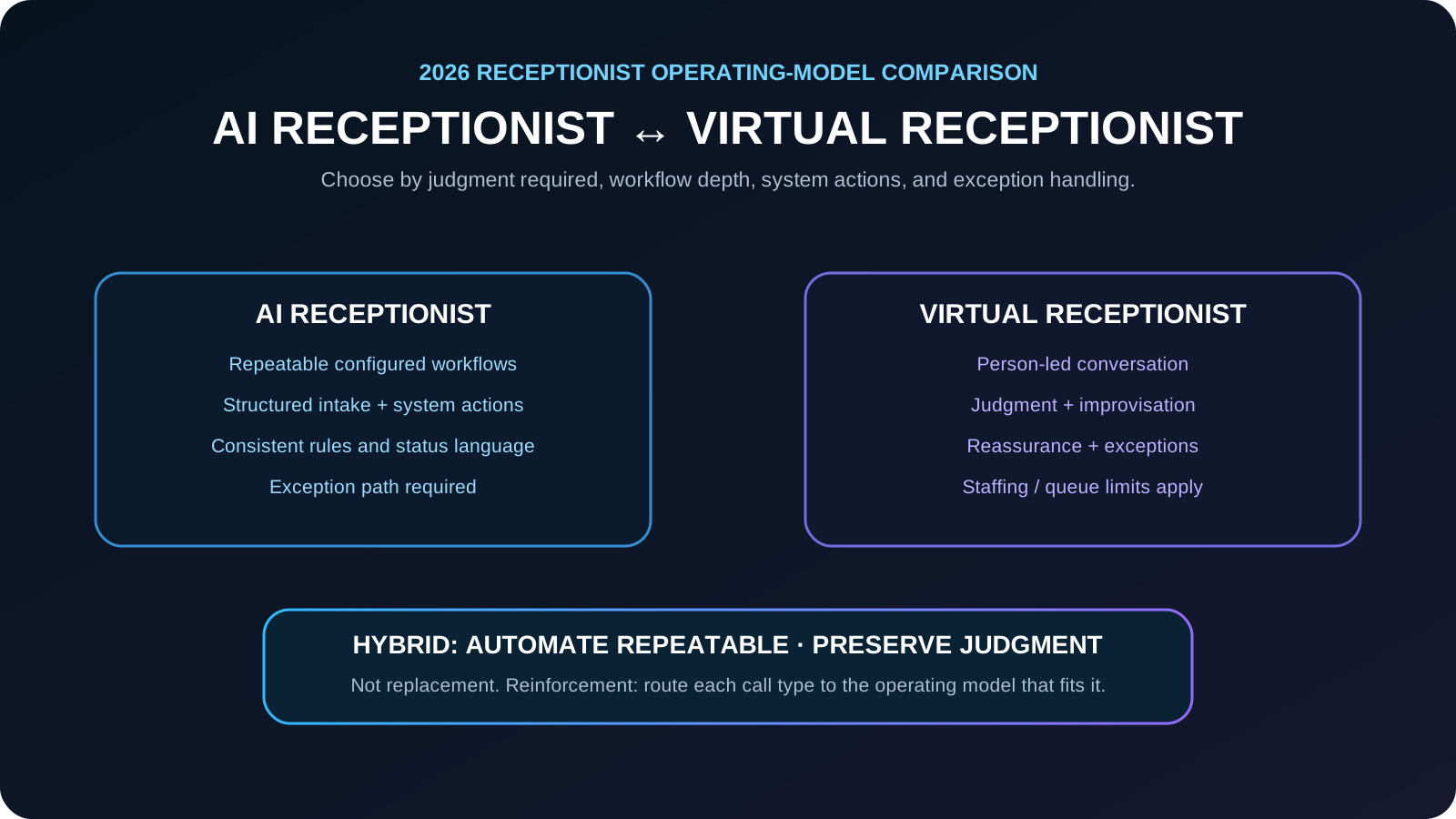
An AI receptionist is software that handles approved conversations and workflow actions through configured rules, data, and integrations. A virtual receptionist is typically a remote person who answers calls and performs administrative work from account instructions and available tools. AI is strongest when the work is repeatable, structured, measurable, and connected to systems such as scheduling, CRM, notifications, or follow-up. A person-led virtual receptionist is stronger when callers need nuanced judgment, reassurance, improvisation, or handling of exceptions that are difficult to formalize. Neither model is universally better, and neither should be evaluated only by whether the phone was answered. Compare completed outcomes, error and rework rates, coverage needs, system access, exception handling, provider or staffing limits, and total operating cost. Many businesses benefit from a hybrid model in which AI handles repeatable work and a person takes judgment-heavy exceptions.
What matters most
- AI receptionists execute configured repeatable workflows; virtual receptionists are person-led and generally stronger at ambiguous or judgment-heavy calls.
- Neither model is universally better and neither should be selected only by whether the phone gets answered.
- Coverage and capacity claims should reflect actual provider, staffing, concurrency, integration, and technical limits.
- Compare total operating cost using the same scope of work rather than assuming a universal savings percentage.
- Hybrid coverage can automate repetitive work while preserving a person-led path for judgment, relationships, sensitive issues, and exceptions.
- Evaluate both models with the same scenarios and measure completed outcomes, rework, data quality, escalation quality, and staff correction time.
AI Receptionist vs Virtual Receptionist: Cost, Coverage, Workflows & Hybrid Fit (2026)
AI receptionists and virtual receptionists can both answer calls away from a physical front desk, but they operate differently. A person-led virtual receptionist interprets each call using training, account notes, judgment, and the tools available to that provider. An AI receptionist follows configured conversation, business-rule, and integration logic.
The practical question is not whether AI should replace a person. It is which call types are repeatable enough to automate, which require judgment, and what must happen after the conversation. A business may use one model, the other, or both.
Coverage and capacity also need precise language. AI can be configured for extended or continuous coverage, subject to provider availability, configured concurrency, integrations, and technical limits. Virtual-receptionist capacity depends on provider staffing, queues, schedules, and service terms. Neither should be described as unlimited without verified evidence.
Start with the difference in operating model
A virtual receptionist is generally a remote person operating from scripts, notes, training, and tools. An AI receptionist is a configured software workflow that uses approved knowledge, rules, and connected actions.
- Person-led virtual receptionist: interprets context, adapts language, and handles exceptions using judgment.
- AI receptionist: executes repeatable conversation and action logic consistently when the situation fits configured rules.
- Both models need onboarding, current business information, access controls, escalation rules, quality review, and a clear definition of success.
- Both models can fail when account information is stale, permissions are wrong, escalation ownership is unclear, or the business has not defined what should happen next.
The core distinction is person-led judgment versus configured repeatable execution—not “good” versus “bad.”
Where a person-led virtual receptionist is usually strongest
- Calls that change direction frequently or depend on incomplete context
- Sensitive complaints where reassurance, judgment, or nuanced wording matters
- Unusual exceptions that are difficult to encode in advance
- Situations requiring interpretation across messy account notes or non-standard procedures
- Complex coordination where a person must decide which internal party should become involved
- Businesses that intentionally want a person-led caller experience for most phone interactions
A person is often the better path when the business wants discretion rather than strict repeatability.
Where an AI receptionist is usually strongest
- High-frequency questions with approved, current answers
- Structured lead qualification and intake
- Repeatable appointment or reservation requests under defined rules
- Consistent collection of required fields
- Direct creation of CRM records, scheduling requests, notifications, or follow-up when integrations are configured and tested
- After-hours or overflow coverage for approved workflows, subject to provider and technical limits
- Rule-based routing where the qualifying conditions and fallback are explicit
Automation is most useful where the business can define the inputs, allowed actions, status language, and exception path.
Compare the operating tradeoffs, not just the greeting
| Decision area | Virtual receptionist | AI receptionist |
|---|---|---|
| Judgment and improvisation | Person can interpret ambiguous or changing situations | Best when exceptions are explicitly routed rather than improvised |
| Consistency | May vary by person, shift, training, and account notes | Uses the same configured rules until the workflow or data is changed |
| Coverage | Depends on provider staffing, schedule, queue, and service terms | Can be configured for extended or continuous coverage subject to provider, capacity, integration, and technical limits |
| Capacity | Depends on staffing and queue availability | Depends on configured concurrency and provider/service limits |
| System actions | Depends on the provider’s tools, permissions, and process | Can write structured records or trigger connected actions when supported and authorized |
| Workflow changes | May require note updates, training, or provider coordination | Can often be changed centrally, but changes still require testing and governance |
| Quality control | Call review, coaching, provider management, and account updates | Conversation review, workflow testing, data validation, and rule revision |
| Exceptions | Person can often handle more variation directly | Needs a configured person, callback, or escalation path for situations outside the governed workflow |
Compare cost using the same scope of work
Avoid comparing a headline software subscription to a person-led service without normalizing the work being purchased. The cheaper option can become the more expensive operating model if it leaves more rework, missed follow-up, manual data entry, or exception handling for the internal team.
A useful comparison includes the recurring service price plus the work required to configure, manage, review, correct, and complete the caller outcomes.
- Base subscription, package, staffing, or usage charges
- Included and excluded call minutes or usage
- After-hours, overflow, holiday, or peak-volume rules
- Setup, onboarding, account maintenance, or integration work
- Internal staff time spent correcting records or completing unfinished tasks
- System access, scheduling, CRM, messaging, or follow-up capability
- Escalation, transfer, callback, and exception handling
- Provider or technical capacity limits
- Cancellation, term, overage, or plan-change conditions
Do not assume a universal savings percentage. Compare the total operating cost for the outcomes your business actually needs.
A hybrid model can divide work by judgment required
Hybrid coverage can use AI for the repeatable first layer and route exceptions to a virtual receptionist or internal team member with structured context already captured. This can reduce repetitive work without forcing every caller through automation or interrupting people for routine tasks.
- List the most common call reasons.
- Mark each as repeatable, variable, sensitive, urgent, or exception-heavy.
- Define what a completed outcome looks like for each call type.
- Assign repeatable governed tasks to automation where appropriate.
- Assign judgment-heavy and sensitive calls to a person-led path.
- Define the exact handoff state so the caller is not told a transfer, callback, appointment, or action is complete before the receiving workflow confirms it.
Not replacement. Reinforcement: automate repeatable work and preserve people for judgment, relationships, and exceptions.
Test both models with the same recorded scenarios
- Choose representative routine and difficult call scenarios.
- Use the same business information, scheduling rules, escalation policy, and success criteria.
- Test normal hours, after hours, overflow, person-request, unavailable-time, and exception cases.
- Measure completed outcome accuracy, missing fields, incorrect status language, rework, escalation quality, and staff correction time.
- Review caller-experience signals separately from workflow completion.
- Choose the model by call type if one operating model is not best for every scenario.
The useful evidence is what each model completes correctly—not whether either one sounds impressive in a scripted demo.
Example: routine scheduling versus an unusual complaint
One caller wants a standard appointment within the business’s configured rules; another raises a complex complaint with conflicting details and asks for an exception.
The AI can handle the repeatable appointment workflow when the scheduling connection and rules support it. The exception-heavy complaint routes to a person-led path with the caller context already captured instead of forcing a rigid automated flow.
The business uses automation where the rules are clear and preserves person-led judgment where the situation is not safely or reliably formalized.
Frequently asked questions
Is a virtual receptionist the same as an answering service?
The terms overlap, but services vary. Some mainly answer and take messages; others perform receptionist work such as scheduling, qualification, transfers, outbound follow-up, or administrative coordination. Compare the actual workflow and permissions rather than the label.
Can an AI receptionist replace a virtual receptionist?
Sometimes it can take over repeatable call types, but replacement should not be the default assumption. Person-led reception remains valuable for judgment, reassurance, ambiguity, and exceptions. Many businesses get a better fit by assigning repeatable work to AI and preserving a person-led path where judgment is needed.
Can an AI receptionist provide 24/7 coverage?
It can be configured for continuous coverage, subject to provider availability, configured concurrency, integrations, and technical limits. That should not be presented as a guarantee that every call or every requested outcome will always complete.
Which costs less: an AI receptionist or a virtual receptionist?
There is no universal answer without comparing the same scope. Pricing models, usage, staffing, integrations, rework, internal management, and exception handling differ. Compare total operating cost for verified completed outcomes rather than relying on a headline monthly price.
When is a hybrid receptionist model the better choice?
Hybrid coverage is useful when many calls are repetitive but a meaningful share still requires judgment, reassurance, or unusual exception handling. AI can complete the governed first layer and route only the appropriate calls to a person with structured context attached.
How to verify this answer in your own business
Compare AI and virtual-receptionist models by completed outcome quality, rework, exception handling, data accuracy, staff correction time, and operating cost using the same business scenarios.
- first-contact completed outcomes
- appointment or request status accuracy
- required-field completeness
- exception and escalation rate
- handoff success
- caller-experience signals
- staff correction or rework time
- provider or technical failure rate
- total operating cost per verified completed outcome
Run the same routine, variable, after-hours, person-request, scheduling, unavailable-time, complaint, transfer, and exception scenarios through each model. Inspect the resulting records and handoffs, then compare completion accuracy, rework, escalation quality, caller-experience signals, and total operating effort.
Evidence policy: this page does not invent a universal conversion rate. Results depend on call demand, workflow quality, staff response, and implementation.
See how AEOS connects customer conversations to business actions.
Explore AEOS by Orca Charts for AI receptionist, scheduling, CRM, follow-up, business Q&A, live transfers, and team workflows for Receptionist Comparisons.