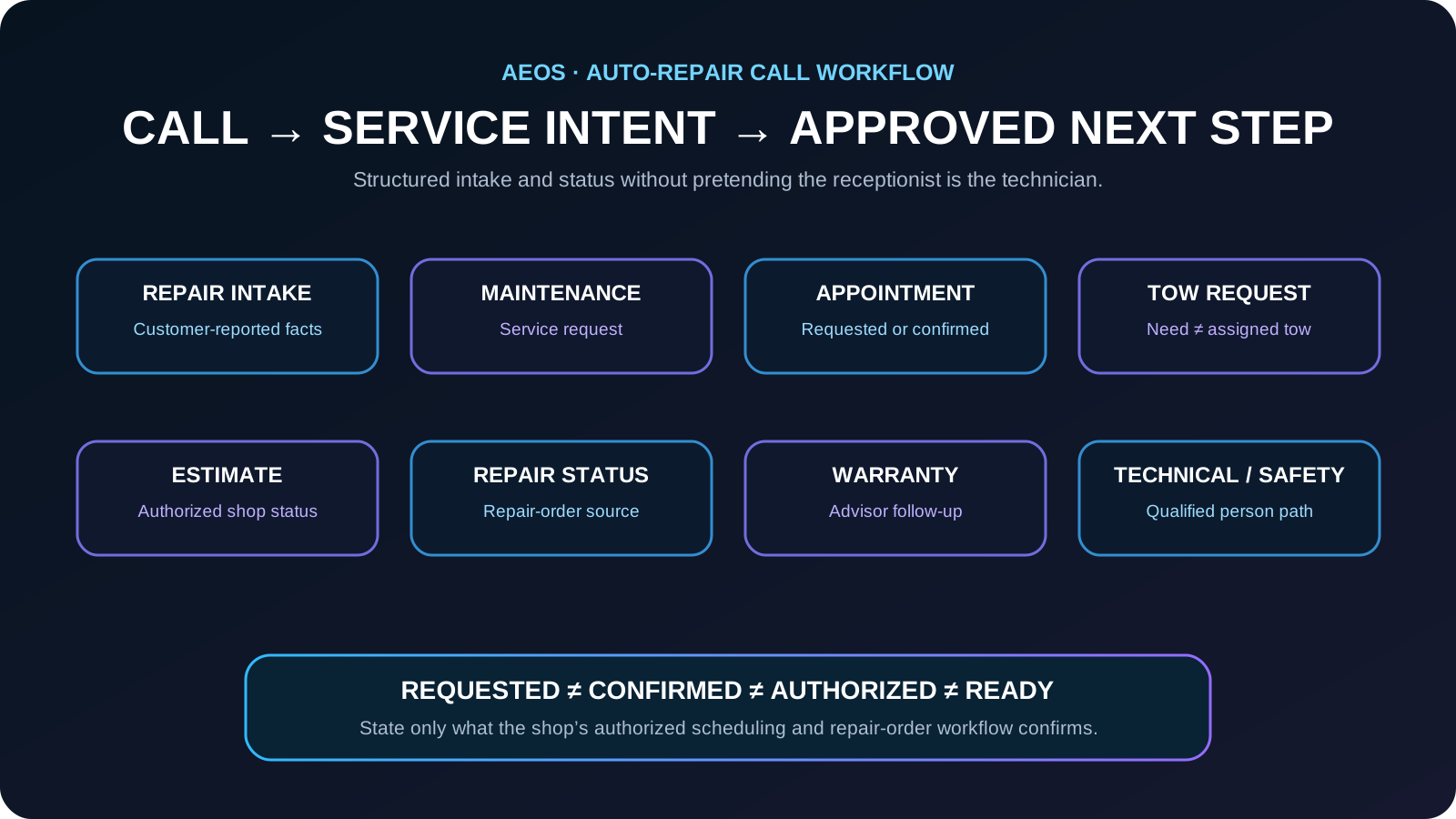
How can an AI receptionist help an auto repair shop handle customer calls?
An auto-repair AI receptionist can handle approved administrative workflows for new repair requests, routine maintenance, estimate inquiries, appointment requests, tow or drop-off needs, existing repair-order status, warranty-related questions, and service-advisor follow-up. It can collect the caller’s contact information, vehicle year/make/model, symptoms in the caller’s own words, drivability statement, vehicle location, tow need, preferred timing, and existing repair-order context; then create the configured next step or route the call to the correct person. It should not diagnose the vehicle, decide that a vehicle is safe to drive, guarantee a repair price, authorize repairs, promise parts availability, or state a completion or pickup time that the shop has not actually confirmed.
What matters most
- Separate new repair, maintenance, estimate, appointment, tow, status, warranty, and exception calls.
- Capture contact information, year/make/model, caller-described symptoms, drivability statement, location, tow need, timing, and repair-order context when applicable.
- Use only the shop’s approved scheduling, estimate, towing, warranty, repair-order, and status sources.
- Distinguish requested, confirmed, estimate pending, authorized, in progress, and ready-for-pickup states.
- Do not diagnose, declare the vehicle safe to drive, invent a repair price, authorize work, or promise parts or completion.
- Measure intake completeness, correct routing, status accuracy, service-advisor interruption, and completed next steps.
AI Receptionist for Auto Repair Shops: Service Calls, Scheduling & Status Updates (2026)
Auto-repair phone calls often interrupt the same service advisors who are checking vehicles in, explaining estimates, coordinating technicians, and updating customers. The goal is not to turn the receptionist into a mechanic. It is to remove repetitive intake and status work while preserving technician and service-advisor authority.
A useful workflow first identifies whether the caller needs new repair intake, maintenance, an appointment, towing, an estimate, an existing repair-order update, warranty help, or a person. It then collects only the facts needed for that administrative path.
Status language matters. A customer can request an appointment, request a tow, receive an estimate for review, authorize work, have repairs in progress, or be told the vehicle is ready for pickup. Those are different states and should never be collapsed into an unsupported promise.
Auto-repair call map: route each customer to the correct service workflow
Classify the intent before collecting a long intake form. That reduces repeated questions for the customer and keeps service advisors from receiving incomplete records.
- New repair concern → collect contact details, year/make/model, symptoms in the caller’s words, location, drivability statement, tow need, and preferred timing.
- Routine maintenance → identify the requested service and create the approved appointment or callback request.
- Estimate inquiry → collect the customer’s request and route it to the shop’s approved estimating process without inventing a final price before inspection.
- Appointment request → check or request only authorized availability and clearly distinguish requested from confirmed.
- Tow or drop-off need → capture location, contact details, vehicle facts, and the requested next step; do not claim towing is confirmed until the shop or authorized provider confirms it.
- Existing repair order → identify the customer and repair-order context, then route status questions to the authorized source or person.
- Warranty or prior-work concern → create the approved service-advisor or manager follow-up path.
- Technical, safety-sensitive, disputed, or uncertain question → use the shop’s approved person-handoff language rather than diagnosing or improvising advice.
Capture what the customer reports. Preserve diagnosis, repair decisions, and technical judgment for the shop.
Keep request, estimate, authorization, repair status, and pickup status separate
Customers make decisions based on status language. The receptionist should state only the status confirmed by the shop’s actual scheduling, repair-order, estimate, parts, or service-advisor workflow.
- Service request captured: the shop has a structured intake record.
- Appointment requested: the customer supplied a preferred date or time, but the appointment is not necessarily confirmed.
- Appointment confirmed: an authorized scheduling process created the appointment.
- Tow requested: towing is needed or requested; this is not the same as a tow being assigned or en route.
- Estimate pending or available: use only the status provided by the authorized shop workflow.
- Repair authorized: use only when the shop’s actual authorization record confirms customer approval.
- Repair in progress: use only when the repair-order workflow confirms work has begun.
- Ready for pickup: use only when an authorized shop source confirms the vehicle is ready.
- Completion or arrival time: never invent a repair-completion, parts-arrival, tow-arrival, or pickup time.
REQUESTED ≠ CONFIRMED ≠ AUTHORIZED ≠ READY FOR PICKUP.
Calls the auto repair workflow can handle
A well-defined first version can cover repair inquiries, estimate requests, appointment intake, and vehicle-status routing. The system should distinguish new opportunities from existing-customer requests, vendor calls, employment inquiries, spam, and situations that require a person.
- Answer approved questions about hours, locations, and service availability
- Capture complete contact and request details
- Apply service-area, schedule, or policy rules
- Create an appointment request or qualified lead
- Send a confirmation or next-step text
- Transfer or alert staff when an escalation rule is met
Information to collect
- Caller name and callback number
- Vehicle year, make, and model
- Primary symptom or requested service
- Driveability and warning-light status
- Preferred drop-off date
- Existing repair-order status if applicable
Calls that should escalate
The receptionist should not improvise through high-risk or policy-sensitive situations. It should give the approved safety or handoff language and route the caller according to the business rule.
- Unsafe driving conditions
- Collision or roadside emergency requests
- Technical promises without inspection
- Final price commitments before diagnosis
A practical conversation flow
- Greet the caller and identify the business.
- Ask the reason for the call and classify the intent.
- Collect only the information required for that intent.
- Apply location, availability, urgency, and policy rules.
- Complete the permitted action or create a pending request.
- Repeat the next step and send confirmation when enabled.
- Record the result for staff review and follow-up.
Metrics to review after launch
- Calls answered and completed
- Qualified leads or appointment requests
- Missing or inaccurate intake fields
- Correct and incorrect escalations
- Caller requests to reach a person
- Time from call to staff action
- Revenue or bookings connected to handled calls
Start with the two or three auto repair call outcomes that occur most often. Reliability matters more than launching every possible workflow at once.
Example: “My car will not start”
A driver says the vehicle will not start and asks whether the shop can look at it today.
The AI collects the customer’s contact information, year/make/model, symptoms in the customer’s own words, vehicle location, drivability statement, tow need, and preferred timing. It creates the approved service request and clearly distinguishes requested service from confirmed scheduling, diagnosis, towing, or repair authorization.
The service advisor receives a complete intake record without an AI diagnosis, unsafe drivability conclusion, invented price, or unsupported same-day completion promise.
Auto-repair customer-conversation knowledge graph
This map defines the customer language, required facts, approved workflow, intended outcomes, and guardrails AEOS should understand for this industry.
Common problems
- vehicle will not start
- warning light
- maintenance request
- noise or vibration
- tow need
- repair-status request
- estimate request
What callers say
- My car will not start
- The check-engine light is on
- I need an oil change
- Is my car ready?
- Can you tow it?
Information to capture
- caller name
- callback number
- year
- make
- model
- symptoms in caller’s words
- drivability
- vehicle location
- tow need
- preferred timing
AI workflow
- identify service or status intent
- capture vehicle and symptom facts
- separate tow or safety need
- request appointment or route status call
- send structured record
- preserve technician diagnosis
Business outcomes
- complete repair intake
- scheduled service request
- correct tow routing
- reduced status-call interruption
Guardrails
- no diagnosis
- no guaranteed price
- no guaranteed completion date
- no unsafe driving advice
Frequently asked questions
Can an AI receptionist book auto repair appointments?
It can book or request appointments when connected to the scheduling process and given clear rules for availability, duration, approval, and exceptions.
What happens when the caller asks something the AI cannot answer?
The workflow should acknowledge the limit, capture the request, and transfer or queue a callback rather than guessing.
Can the business change the script later?
Yes. Business hours, offers, questions, routing, and escalation rules should be maintained as controlled configuration and reviewed whenever operations change.
Can an auto-repair AI receptionist tell a caller whether the car is safe to drive?
It should not independently determine that a vehicle is safe or unsafe to drive. It can capture exactly what the caller reports, use the shop’s approved safety or escalation language, and route the question to a qualified person or configured roadside workflow.
Can an AI receptionist give an auto-repair estimate or completion time?
It can repeat an estimate, price range, parts status, or completion time only when that information comes from an authorized shop source. It should not invent a diagnosis, final repair price, parts availability, or completion promise before the shop confirms it.
How to verify this answer in your own business
Evaluate the auto-repair workflow by intake completeness, correct service or status routing, accurate use of scheduling and repair-order states, reduced advisor interruption, and the absence of unapproved technical, pricing, authorization, or completion claims.
- vehicle-data completeness
- service-request completion
- appointment-request versus confirmation accuracy
- tow-request routing accuracy
- repair-status routing accuracy
- service-advisor interruption time
- unapproved diagnosis, price, authorization, or completion claims
Test new repair intake, routine maintenance, estimate requests, unavailable appointment times, tow needs, no-start calls, warning-light calls, existing repair-order status, warranty questions, disputed estimates, requests for a person, and questions about drivability or completion. Inspect the resulting appointment, service, tow, status, CRM, or advisor record and verify that the caller heard the actual status without an AI diagnosis or unsupported promise.
Evidence policy: this page does not invent a universal conversion rate. Results depend on call demand, workflow quality, staff response, and implementation.
See how AEOS connects customer conversations to business actions.
Explore AEOS by Orca Charts for AI receptionist, scheduling, CRM, follow-up, business Q&A, live transfers, and team workflows for Industry Guides.