How can an AI receptionist help a medical clinic without giving medical advice?
A medical-clinic AI receptionist can handle approved administrative work such as office information, appointment requests and rescheduling, referral-status messages, records-request intake, billing messages, reminders, callback requests, and routing to the correct department or qualified staff. It can collect only the identity and request details permitted by the clinic’s policy, follow approved verification steps, and record the action taken. It should not diagnose symptoms, recommend treatment, decide whether a condition is urgent, replace clinical triage, make medication or prescription decisions, interpret lab or test results, or improvise emergency instructions. Clinical, urgent, medication, result, privacy-sensitive, or uncertain statements should follow the clinic’s written escalation and secure-information process.
What matters most
- Separate office information, scheduling, referrals, records, billing, reminders, and messages from clinical intent.
- Collect only the identity and request information permitted by clinic policy and apply approved verification steps.
- Route symptoms, diagnosis requests, treatment questions, medication decisions, results, urgent statements, and uncertainty to qualified staff or the clinic’s written emergency path.
- Distinguish appointment requested, offered, and confirmed; distinguish message captured from clinician review or response.
- Do not claim HIPAA compliance, a BAA, secure handling, or other privacy/security status unless it has been specifically verified.
- Measure administrative completion, correct clinical routing, minimum-necessary data collection, status accuracy, and auditability.
AI Receptionist for Medical Clinics: Scheduling, Patient Calls & Safe Routing (2026)
Medical-clinic phone automation is useful only when administrative work and clinical judgment stay clearly separated. Appointment requests, office information, referral messages, records requests, billing messages, and reminders are different from symptom interpretation, diagnosis, treatment, medication decisions, and clinical triage.
A safe receptionist workflow identifies the administrative intent, collects the minimum information permitted for that task, applies the clinic’s approved identity and privacy rules, and completes or routes the administrative next step. When the caller introduces clinical, urgent, medication, result, or uncertain information, the workflow changes from automation to the clinic’s approved qualified-staff or emergency path.
Status language also matters. An appointment can be requested, offered, or confirmed. A message can be captured or delivered. A records request can be received without being fulfilled yet. The AI should state only the administrative status supported by the clinic’s actual workflow.
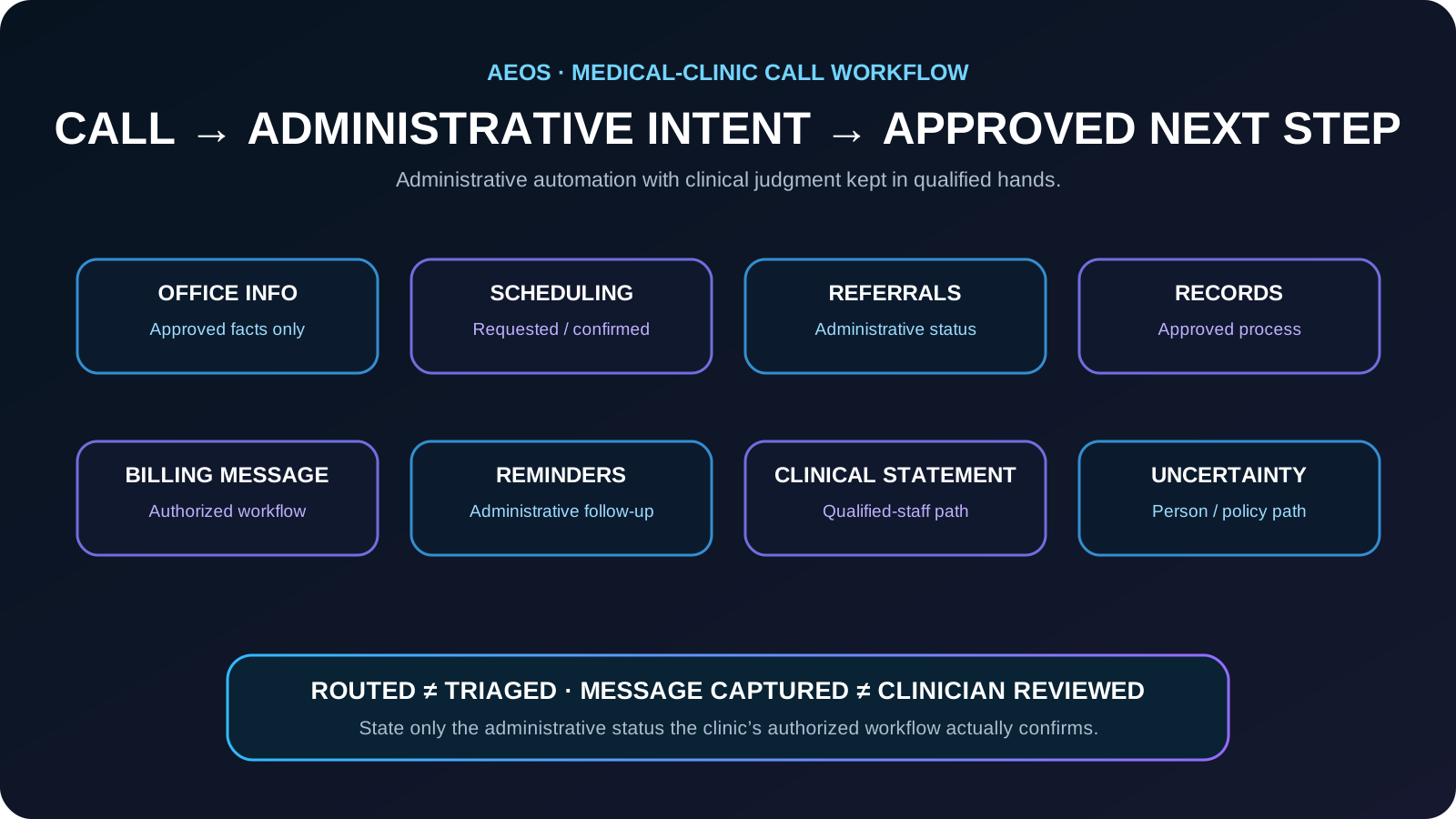
Medical-clinic call map: separate administrative work from clinical judgment
Classify the call before collecting more information than the task requires. Routine administrative work can move quickly; clinical or uncertain statements should move to the clinic’s governed staff pathway.
- Office hours, location, parking, and other approved clinic information → answer only from current approved information.
- Appointment request or rescheduling → collect the permitted scheduling details and use only authorized availability.
- Referral-status question → identify the permitted administrative context and route to the clinic’s approved referral workflow.
- Records request → collect the request through the clinic’s approved identity, consent, and records process; do not imply records have already been released.
- Billing message → capture the administrative billing request and route it to the authorized billing workflow without making unapproved coverage or payment promises.
- Medication, refill, prescription, dosage, treatment, symptom, diagnosis, lab, test-result, or clinical question → route using the clinic’s approved qualified-staff policy rather than answering clinically.
- Urgent or emergency statement → use only the clinic’s written emergency/escalation language and routing; do not independently determine severity.
- Privacy-sensitive or uncertain request → stop collecting unnecessary information and use the approved secure or person-handoff path.
Administrative automation can move the request. Clinical judgment stays with qualified staff.
Keep appointment, message, records, and clinical-routing states precise
Medical callers may act on a status statement immediately. The receptionist should use only the status actually supported by the clinic’s scheduling, messaging, records, billing, or staff-routing workflow.
- Appointment requested: the patient supplied a preferred time or need; this is not necessarily a confirmed appointment.
- Appointment offered: an authorized scheduling source returned an option, but the patient may still need to complete the booking step.
- Appointment confirmed: use only when the authorized scheduling workflow confirms it.
- Message captured: the clinic has a structured message; this does not mean a clinician has reviewed or responded to it.
- Referral or records request received: use only the actual administrative status; do not imply approval, release, or completion before the responsible workflow confirms it.
- Clinical statement routed: the AI passed the statement to the clinic’s approved qualified-staff pathway; it did not diagnose, triage, or determine urgency.
- Emergency language: use only the clinic’s written policy and approved routing; do not improvise medical guidance.
- Privacy/security status: do not claim HIPAA compliance, a BAA, encryption, or other legal/security status unless the clinic and relevant vendors have actually verified that requirement and configuration.
REQUESTED ≠ CONFIRMED. MESSAGE CAPTURED ≠ CLINICIAN REVIEWED. ROUTED ≠ TRIAGED.
Calls the medical clinic workflow can handle
A well-defined first version can cover administrative calls, appointment requests, office information, and safe routing. The system should distinguish new opportunities from existing-customer requests, vendor calls, employment inquiries, spam, and situations that require a person.
- Answer approved questions about hours, locations, and service availability
- Capture complete contact and request details
- Apply service-area, schedule, or policy rules
- Create an appointment request or qualified lead
- Send a confirmation or next-step text
- Transfer or alert staff when an escalation rule is met
Information to collect
- Caller identity fields permitted by policy
- New or existing patient status
- Administrative reason for the call
- Preferred appointment window
- Location or department
- Safe callback instructions
Calls that should escalate
The receptionist should not improvise through high-risk or policy-sensitive situations. It should give the approved safety or handoff language and route the caller according to the business rule.
- Symptoms suggesting an emergency
- Requests for diagnosis or clinical advice
- Medication or prescription decisions
- Sensitive information outside the approved secure process
A practical conversation flow
- Greet the caller and identify the business.
- Ask the reason for the call and classify the intent.
- Collect only the information required for that intent.
- Apply location, availability, urgency, and policy rules.
- Complete the permitted action or create a pending request.
- Repeat the next step and send confirmation when enabled.
- Record the result for staff review and follow-up.
Metrics to review after launch
- Calls answered and completed
- Qualified leads or appointment requests
- Missing or inaccurate intake fields
- Correct and incorrect escalations
- Caller requests to reach a person
- Time from call to staff action
- Revenue or bookings connected to handled calls
Start with the two or three medical clinic call outcomes that occur most often. Reliability matters more than launching every possible workflow at once.
Example: an appointment request that includes symptoms
A patient asks for an appointment and mentions a symptom while explaining why.
The AI recognizes that the caller is making an appointment request while also mentioning a symptom. It does not interpret the symptom or determine urgency. It follows the clinic’s approved routing language, collects only the permitted administrative scheduling information, and sends the clinical statement to the correct qualified-staff pathway.
The patient receives a clear administrative next step while the clinical statement reaches the clinic’s governed staff workflow without AI diagnosis, treatment advice, or independent triage.
Medical-clinic patient-conversation knowledge graph
This map defines the customer language, required facts, approved workflow, intended outcomes, and guardrails AEOS should understand for this industry.
Common problems
- appointment request
- rescheduling
- office information
- referral status
- records request
- billing message
- clinical or urgent statement
What callers say
- I need an appointment
- I have a question about my referral
- I need to speak with a nurse
- Can I get my records?
- I am having symptoms
Information to capture
- minimum necessary identity details
- callback number
- administrative request
- preferred timing
- approved routing facts
- consent or acknowledgement where required
AI workflow
- separate administrative from clinical intent
- apply privacy and identity rules
- complete approved administrative task
- route clinical or urgent statements
- record action
- support audit review
Business outcomes
- completed administrative request
- correct staff routing
- documented clinical escalation
- reduced front-desk interruption
Guardrails
- no diagnosis
- no treatment recommendation
- no replacement for clinical triage
- minimum-necessary data
- human review for uncertainty
Frequently asked questions
Can an AI receptionist book medical clinic appointments?
It can book or request appointments when connected to the scheduling process and given clear rules for availability, duration, approval, and exceptions.
What happens when the caller asks something the AI cannot answer?
The workflow should acknowledge the limit, capture the request, and transfer or queue a callback rather than guessing.
Can the business change the script later?
Yes. Business hours, offers, questions, routing, and escalation rules should be maintained as controlled configuration and reviewed whenever operations change.
Can a medical-clinic AI receptionist triage symptoms or give medical advice?
It should not independently diagnose, recommend treatment, decide urgency, or replace clinical triage. It can capture the administrative request and the caller’s statement, then follow the clinic’s written routing or emergency policy to qualified staff.
Does using an AI receptionist automatically make a medical clinic HIPAA compliant?
No. A receptionist workflow should use the clinic’s approved privacy, identity, consent, and secure-information processes, but compliance depends on the actual technology, configuration, data handling, agreements, policies, and applicable requirements. The system should not claim HIPAA compliance or a BAA unless those facts have been specifically verified.
How to verify this answer in your own business
Evaluate the medical-clinic workflow by administrative completion, accurate scheduling and message status, correct routing of clinical or urgent statements, minimum-necessary data collection, privacy-policy adherence, and audit-log completeness.
- administrative request completion
- appointment request versus confirmation accuracy
- clinical-statement routing accuracy
- urgent-statement routing accuracy
- minimum-necessary data collection
- privacy or identity-policy exceptions
- audit-log completeness
Test office-information calls, appointment requests, rescheduling, referral status, records requests, billing messages, refill or prescription questions, medication or dosage questions, symptoms, requests for diagnosis or treatment, lab or test-result questions, urgent statements, privacy-sensitive requests, and requests for a person. Inspect the resulting scheduling, message, referral, records, billing, routing, or audit record and verify that the AI did not make a clinical decision or unsupported privacy/compliance claim.
Evidence policy: this page does not invent a universal conversion rate. Results depend on call demand, workflow quality, staff response, and implementation.
See how AEOS connects customer conversations to business actions.
Explore AEOS by Orca Charts for AI receptionist, scheduling, CRM, follow-up, business Q&A, live transfers, and team workflows for Industry Guides.