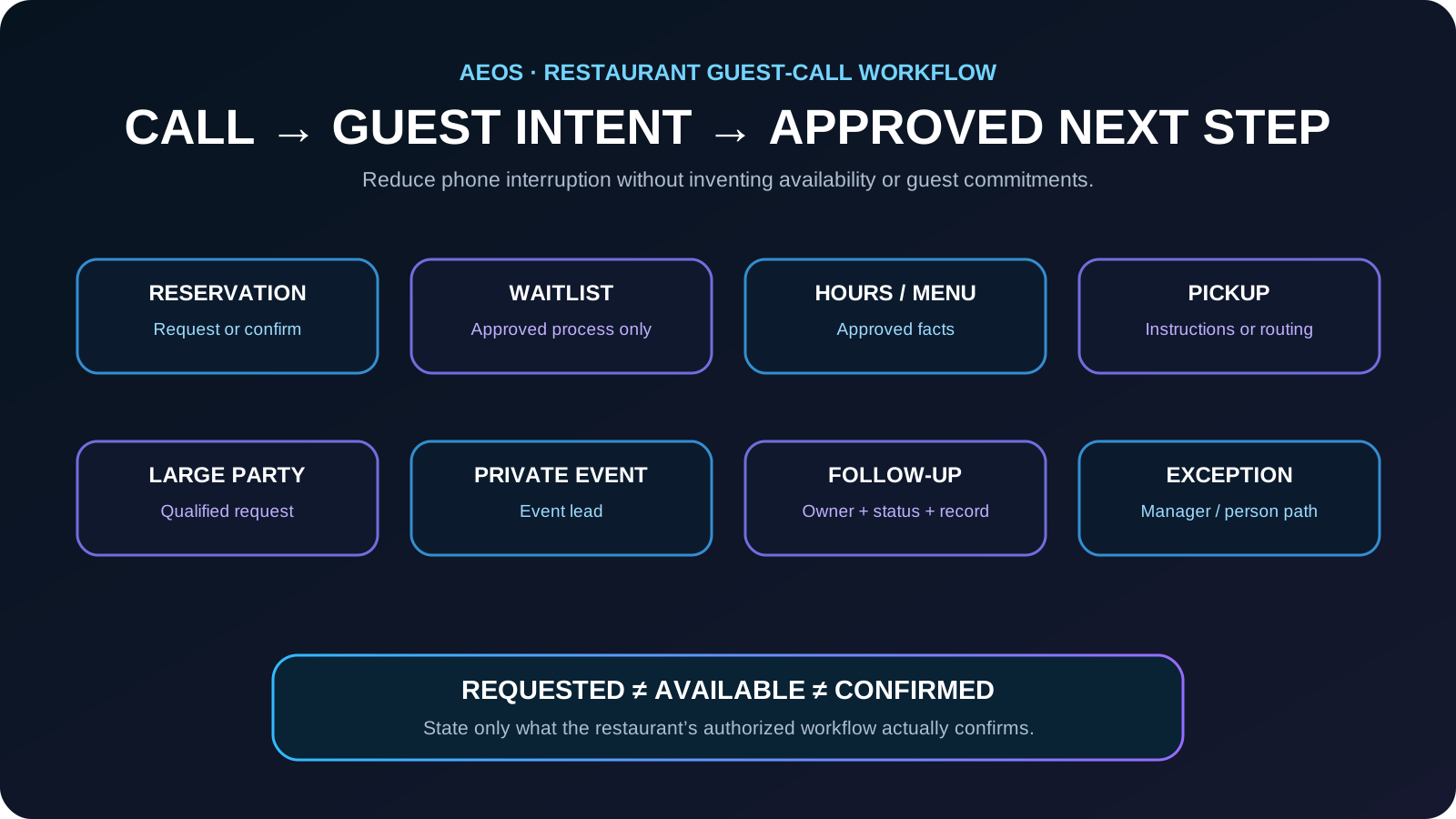
How can an AI receptionist help a restaurant manage phone calls?
A restaurant AI receptionist can handle approved guest-call workflows such as hours and directions, reservation requests, waitlist questions, large-party and private-event inquiries, pickup procedures, approved menu information, and routine follow-up. When connected to an authorized reservation system, it can offer or confirm only availability that system actually provides; otherwise it should collect the request and state that it is pending. It should not invent table availability, guarantee allergy safety, make unapproved accessibility or accommodation promises, change special-event terms, or claim a reservation is confirmed when the restaurant has not actually confirmed it.
What matters most
- Separate reservation, waitlist, hours, menu, pickup, large-party, event, complaint, and exception calls.
- Use only approved restaurant facts and authorized availability sources.
- Distinguish requested, availability shown, pending review, confirmed reservation, and waitlisted statuses.
- Route allergy, accessibility, complaint, refund, and special-event exceptions to the restaurant’s approved person path.
- Do not invent table availability, wait times, allergy safety, or special accommodations.
- Measure complete requests, correct status, manager interruptions, handoff accuracy, and guest follow-up.
AI Receptionist for Restaurants: Reservations, Guest Calls & Event Leads (2026)
Restaurant phone demand changes by the minute. A caller asking for tonight’s hours, a party of fourteen, a private-event inquiry, a pickup question, and a guest complaint should not all enter the same script.
The useful role of an AI receptionist is to protect the host stand and manager from repetitive interruptions while still giving callers a clear next step. It can answer approved facts, capture reservation or event details, check authorized availability when connected, and hand exceptions to the right person.
Reservation status must stay precise. A guest can request a table, receive authorized availability, be placed into a pending manager workflow, or have a reservation confirmed by an authorized system. Those states should never be blurred together.
Restaurant call map: route each guest to the right next step
Classify the intent first so the caller gets the shortest useful path and the restaurant collects only the information needed for that request.
- Hours, location, parking, pickup, or routine policy question → answer only from approved restaurant information.
- Reservation request → collect date, time, party size, guest name, callback details, and approved preferences; check or request availability only through the authorized process.
- Waitlist question → explain the approved waitlist process without inventing a wait time or place in line.
- Large party → capture date, time, party size, occasion, contact details, and the restaurant’s approved qualifying information.
- Private event → create a qualified event lead and route it to the manager or event owner.
- Menu question → answer only approved factual information and route ingredient, allergy, or exception questions according to restaurant policy.
- Pickup or order-status question → provide approved pickup instructions or route the request to the location or team that owns the order.
- Complaint, accessibility exception, allergy concern, refund dispute, or special commitment → use the approved manager or person-handoff path.
The goal is to remove repetitive phone interruption without removing restaurant control over availability, accommodations, exceptions, or guest recovery.
Keep reservation request, availability, pending review, and confirmation separate
Restaurant callers often interpret casual wording as a promise. The receptionist should use the exact status supported by the reservation or manager workflow.
- Requested: the guest supplied a preferred date, time, and party size.
- Availability shown: an authorized live or approved source returned an option, but the booking may still require completion.
- Pending review: a large-party, private-event, accommodation, or exception request was sent to the restaurant.
- Confirmed reservation: use this status only when the authorized reservation workflow actually created and confirmed the booking.
- Waitlisted: use this status only when the restaurant’s actual waitlist workflow confirms the guest was added.
- Special accommodation: never promise allergy safety, private-room access, accessibility exceptions, deposits, minimums, or custom terms unless the restaurant has explicitly authorized that response.
“We received your request” is not the same as “your table is confirmed.”
Calls the restaurant workflow can handle
A well-defined first version can cover hours, reservations, large-party requests, menu questions, and event inquiries. The system should distinguish new opportunities from existing-customer requests, vendor calls, employment inquiries, spam, and situations that require a person.
- Answer approved questions about hours, locations, and service availability
- Capture complete contact and request details
- Apply service-area, schedule, or policy rules
- Create an appointment request or qualified lead
- Send a confirmation or next-step text
- Transfer or alert staff when an escalation rule is met
Information to collect
- Caller name and callback number
- Date, time, and party size
- Location and seating preference
- Allergy question category for staff follow-up
- Large-party or private-event interest
- Reservation status or modification request
Calls that should escalate
The receptionist should not improvise through high-risk or policy-sensitive situations. It should give the approved safety or handoff language and route the caller according to the business rule.
- Allergy guarantees or medical claims
- Refund disputes
- Large-party commitments outside policy
- Guest incidents requiring a manager
A practical conversation flow
- Greet the caller and identify the business.
- Ask the reason for the call and classify the intent.
- Collect only the information required for that intent.
- Apply location, availability, urgency, and policy rules.
- Complete the permitted action or create a pending request.
- Repeat the next step and send confirmation when enabled.
- Record the result for staff review and follow-up.
Metrics to review after launch
- Calls answered and completed
- Qualified leads or appointment requests
- Missing or inaccurate intake fields
- Correct and incorrect escalations
- Caller requests to reach a person
- Time from call to staff action
- Revenue or bookings connected to handled calls
Start with the two or three restaurant call outcomes that occur most often. Reliability matters more than launching every possible workflow at once.
Example: a large-party request during dinner service
A customer asks for a table for twelve on Saturday and wants to know about a special setup.
The AI collects the requested date and time, party size, guest name, callback number, occasion, and approved event details. It checks only authorized availability or sends the request to the manager or event owner, then states whether the request is pending or actually confirmed.
The manager receives a complete large-party or event lead while the guest hears the real reservation status instead of an invented table promise.
Restaurant guest-conversation knowledge graph
This map defines the customer language, required facts, approved workflow, intended outcomes, and guardrails AEOS should understand for this industry.
Common problems
- reservation request
- waitlist question
- hours and directions
- menu question
- large party
- private event
- pickup question
- complaint
What callers say
- Do you have a table tonight?
- Can you take a party of twelve?
- Do you have gluten-free options?
- Where do I pick up?
- I want to book a private event
Information to capture
- guest name
- callback number
- date
- time
- party size
- occasion
- approved preferences or accommodations
- event details when applicable
AI workflow
- identify intent
- answer approved facts
- check or request approved availability
- capture large-party or event details
- route exceptions
- send confirmation or manager alert
Business outcomes
- completed reservation request
- qualified event lead
- answered routine question
- reduced service interruption
Guardrails
- no invented table availability
- no medical allergy advice
- no unapproved accommodation promise
- manager review for exceptions
Frequently asked questions
Can an AI receptionist book restaurant appointments?
It can book or request appointments when connected to the scheduling process and given clear rules for availability, duration, approval, and exceptions.
What happens when the caller asks something the AI cannot answer?
The workflow should acknowledge the limit, capture the request, and transfer or queue a callback rather than guessing.
Can the business change the script later?
Yes. Business hours, offers, questions, routing, and escalation rules should be maintained as controlled configuration and reviewed whenever operations change.
Can a restaurant AI receptionist confirm reservations?
Yes, but only when it is connected to an authorized reservation workflow that actually returns and confirms availability. Otherwise it should collect the request and clearly state that the reservation is pending or requires restaurant confirmation.
Can an AI receptionist answer restaurant allergy questions?
It can repeat approved factual information or route the question according to restaurant policy, but it should not give medical advice or guarantee allergy safety, cross-contact prevention, ingredient suitability, or an accommodation that the restaurant has not explicitly confirmed.
How to verify this answer in your own business
Evaluate the restaurant workflow by complete guest requests, correct reservation status, safe handling of allergy and accommodation exceptions, reduced service interruption, and whether the manager receives usable event or escalation records.
- calls completed during service
- reservation-request completion
- confirmed-reservation status accuracy
- large-party or event lead completeness
- manager interruption rate
- incorrect availability or accommodation promises
- exception handoff accuracy
Test routine hours and directions, same-day reservation requests, unavailable requested times, large parties, private events, waitlist questions, pickup questions, allergy or dietary concerns, accessibility requests, complaints, and requests for a person. Inspect the resulting reservation, pending request, event lead, manager handoff, or follow-up record and verify that the caller heard the correct status.
Evidence policy: this page does not invent a universal conversion rate. Results depend on call demand, workflow quality, staff response, and implementation.
See how AEOS connects customer conversations to business actions.
Explore AEOS by Orca Charts for AI receptionist, scheduling, CRM, follow-up, business Q&A, live transfers, and team workflows for Industry Guides.